


Weekly Highlights
This week's news cycle was a stark reminder as to why so many of us self-host: Google announced they're bringing Gemini to Google Home, users are still complaining about OpenAI's GPT-5 launch, Microsoft confirmed they're dropping OneNote support for Windows 10, Apple TV+ got a price hike, and people on my socials won't stop talking about this #$@!ing bean.
Fortunately, today's newsletter is chock-full of notable software updates and launches (60!) that should keep just about anyone busy this weekend.
And because the outpouring of positive feedback about my bulleted intros is a drug I can't get enough of, here's what tickled my fancy this week:
- Frigate (NVR) released v0.16.0, which brought the much-anticipated support for face and license plate recognition (bye-bye, Compreface and Double-Take)
- Portainer (container manager) got a facelift with its recent LTS release (and I have no idea how to represent their new branding in my icon collection)
- The amazing Fediverse evangelist Elena Rossini taught me 'sudo' means 'sweat' in Italian (how appropriate)
- OneUptime published an article preaching against SSO paywalls despite actively implementing one themselves
- The developer of SilverBullet (note-taking) facilitated a transparent and open discussion on the future sustainability of the platform
- Jellyfin users feasted with significant updates to existing clients (Streamyfin) and new project launches (Pixelfin, PuniPuni, and Void)
- Plex users also felt some love (well, maybe) with the launch of AuthPortal, a unique authentication system built around Plex users
- nzb360 (mobile *arr manager) released native Unraid support
Happy selfh.st/ing!
Self-Host Weekly is an independent publication supported by its readers. Consider signing up or making a donation to show your support and and receive exclusive member perks for your contribution!
Newswire
 Hugh Lashbrooke
 Katrin Goethals


 zef
zef
 Sourav Rudra
 Andy Maxwell
 Miranda Bishop
Quote of the Week
– Anonymous selfh.st subscriber
Feedback
Content Spotlight
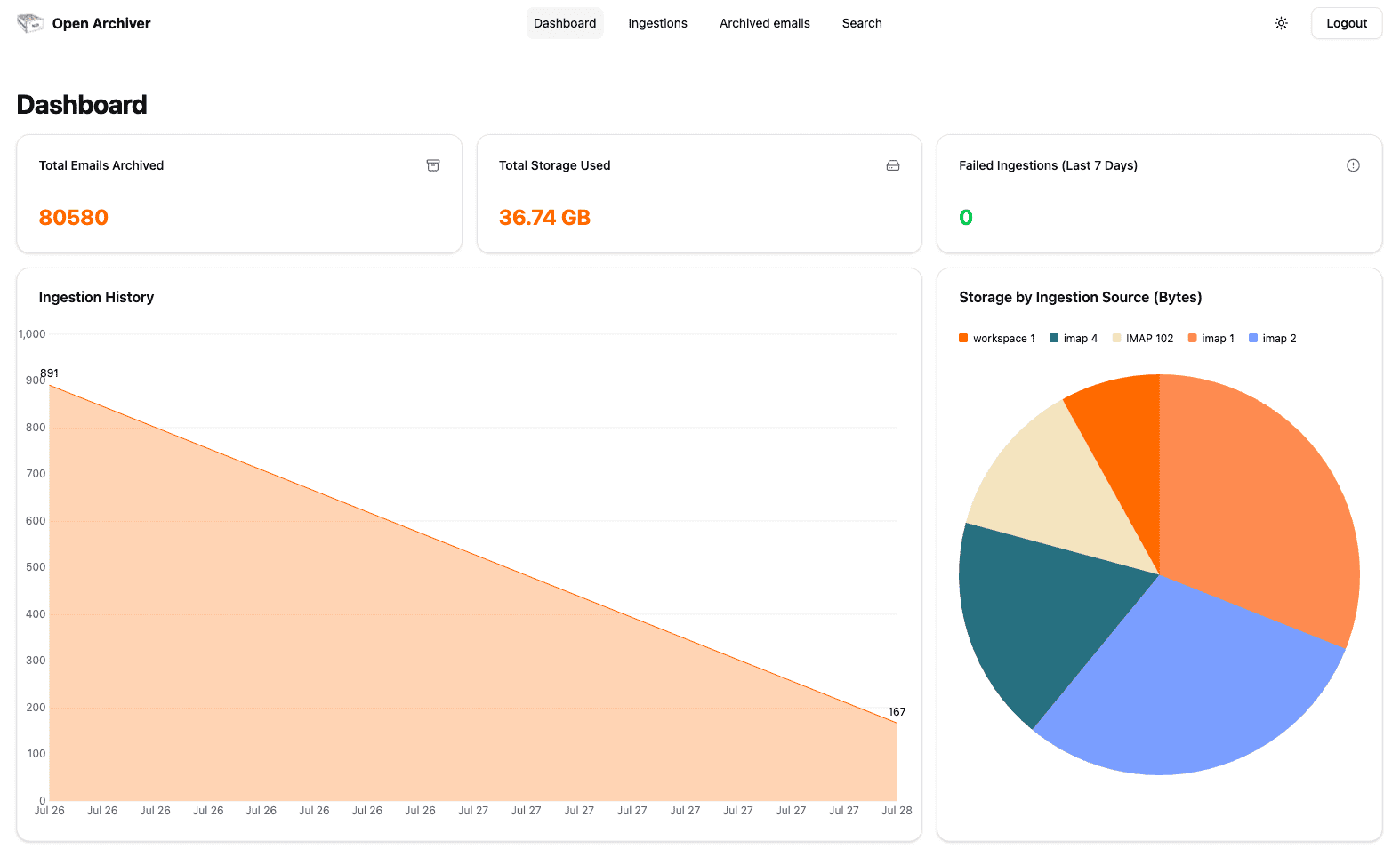
Meet Open Archiver, a self-hosted e-mail archive, storage, and indexing platform. With Open Archiver, users can easily connect to external mail services like Gmail, Microsoft 365, and other generic implementations for exporting and storing e-mails in a standard .eml format. Features include pluggable storage backends (including S3), search, thread discovery, retention policies, audit trail logs, and more.
Open Archiver can be easily deployed via Docker and requires an external database for data storage.
Links: Website, Source Code
Videos and Podcasts
- Haus: The Productivity Dashboard from Moodist's Creator | DB Tech
- Owning your data: The open source path with Nextcloud and MariaDB | The Nextcloud Podcast
- Music Assistant - Your music, your way, on your devices! | Awesome Open Source
- Building a Home Assistant Kiosk - Why Did I Wait So Long? | Jim's Garage
Command Line Corner
Use ls -l <filename> to quickly view the permissions of an individual file:
$ ls -l example.txt
  -rwxrw---- user user example.txt
Click here for an archive of commands shared in past newsletters.
Share Your Content
I'm always looking for new and existing self-hosted content to share in Self-Host Weekly. Reach out using the button below if you'd like to have your own content featured or have a suggestion for content types you'd like to see featured in future newsletters.